Understanding Racial Covenants in Dane County: Event Recap & How You Can Take Action
At a glance: Learn what racial covenants are, why they still matter, and how Dane County’s Prejudice in Places program helps remove discriminatory language from property records.
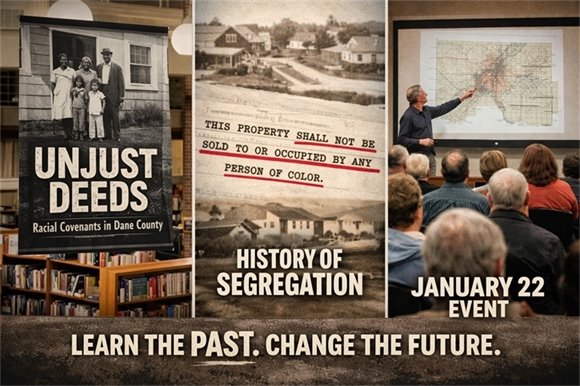
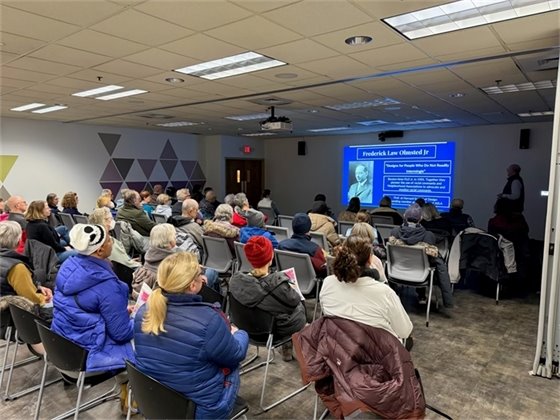
On January 22, 62 community members gathered at the Middleton Public Library for a public presentation titled “The History of Racial Covenants in Dane County and Beyond,” presented by Rick Bernstein, Executive Director of the Dane County Historical Society.
The event was hosted as a Fill & File session, combining historical education with a practical opportunity for residents to take action. Attendees learned about the history and lasting impacts of racial covenants—discriminatory clauses that were once commonly included in property deeds and real estate records to exclude people based on race, religion, or ethnicity.
Although racial covenants were outlawed by federal law in 1968, many of these restrictions still exist in historical property records today. While they are no longer legally enforceable, their presence can be painful, confusing, and harmful. Understanding this history helps provide important context for how neighborhoods developed and why disparities still exist in our communities.
About the Prejudice in Places Program
During the presentation, attendees were introduced to Dane County’s Prejudice in Places program, which helps property owners identify and remove discriminatory language from their property records. The program allows residents to file a state form that formally disavows and removes this language from the record—at no cost.
At the event, residents had the opportunity to:
--Learn how to check whether their property contains a racial covenant
--Complete the required state forms on site
--Have documents notarized and recorded without paying standard fees
Special thanks to Bridget Van Belleghem, AICP, Senior Planner with Dane County, for assisting with notarization, to Sandy Lewis and Kristi Warriner of the Middleton Landmarks Commission for organizing the event, and to the Wisconsin Realtors Association Foundation for providing grant funding to waive document recording fees.
Missed the Event? You Can Still Participate
Residents who were unable to attend can still learn more and take part in the program. Dane County provides online tools to help property owners search their records and determine whether discriminatory language is present, along with step-by-step instructions for filing the removal form.
Learn more about Prejudice in Places and check your property:
https://www.danecountyplanning.com/Prejudice-in-Places
Throughout January, residents are also encouraged to continue learning about this topic through the Unjust Deeds exhibition and related educational programming at the library.
By understanding our shared history—and taking steps to address it—we can help build a more informed, inclusive, and welcoming community today.
 Share on Facebook
 Share on Twitter
 Share via Email
